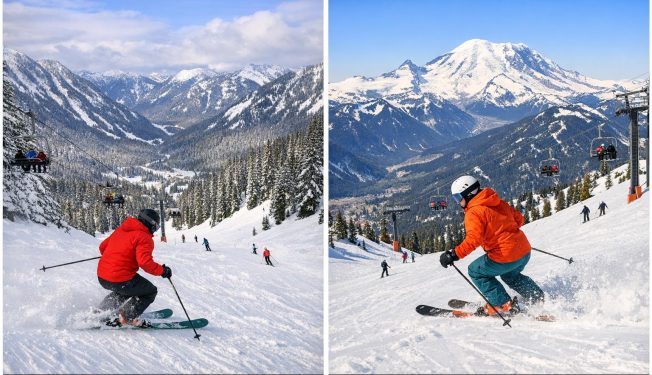
Overview of Stevens Pass and Crystal Mountain
Stevens Pass and Crystal Mountain are two well-established ski resorts in Washington state, each offering a broad range of terrain, infrastructure, and seasonal activities. Located within the Cascade Range, both destinations benefit from consistent winter snowfall and proximity to major population centers such as Seattle. Despite these similarities, the resorts differ in scale, layout, and overall visitor experience, making them suitable for different types of skiers and snowboarders.
Stevens Pass is often associated with accessibility and balanced terrain distribution, while Crystal Mountain is recognized for its size, elevation, and expansive alpine environment. Both resorts are integrated into the regional winter sports culture and draw a combination of local visitors and travelers from other parts of the United States.
Location and Accessibility
Stevens Pass is located approximately 78 miles east of Seattle along U.S. Route 2. The route is a direct mountain highway that remains open throughout the winter season, although travel times can vary depending on weather and traffic conditions. Its relatively straightforward access makes it a common choice for day trips, particularly among residents of Seattle and nearby communities. Additional details regarding travel, parking, and seasonal updates can be found on the official Stevens Pass website.
Crystal Mountain lies about 85 miles southeast of Seattle and is accessed via State Route 410. The resort sits near the northeastern boundary of Mount Rainier National Park, which contributes to its scenic surroundings. While the drive is longer and includes stretches of mountain road, the location offers a more remote setting. Information about directions, transportation options, and road conditions is available on the Crystal Mountain homepage.
Transportation infrastructure at both resorts includes parking facilities, though availability may be limited during peak periods. Shuttle services and carpooling options are sometimes encouraged to reduce congestion, especially on weekends and holidays.
Ski Terrain and Lifts
Stevens Pass encompasses over 1,125 acres of skiable terrain and is known for its relatively even distribution of beginner, intermediate, and advanced runs. The resort includes approximately 37 named trails as well as terrain parks designed for freestyle skiing and snowboarding. The lift system consists of 10 lifts, including high-speed quads and traditional chairlifts, designed to provide steady access across the mountain.
Night skiing is a notable feature at Stevens Pass, with a significant portion of terrain illuminated after sunset. This extends usability beyond daylight hours and makes the resort distinct within the region. Terrain parks are regularly maintained and cater to a range of skill levels, from introductory features to advanced jumps and rails.
Crystal Mountain, by comparison, offers more than 2,600 acres of skiable terrain, making it the largest ski resort in Washington. The terrain is diverse and includes long groomed runs, steep chutes, bowls, and tree skiing areas. The lift system includes 11 lifts, with a mix of high-speed chairs and gondola access. The Mt. Rainier Gondola is a defining feature, transporting visitors to higher elevations while providing views of Mount Rainier and surrounding landscapes.
The terrain at Crystal Mountain tends to favor intermediate and advanced skiers, although beginner areas are also available. Its larger footprint allows for more variation in route selection and a greater sense of openness compared to Stevens Pass.
Snow Conditions and Season Length
Both Stevens Pass and Crystal Mountain are positioned within a region known for substantial annual snowfall. Stevens Pass typically receives around 460 inches of snow each year. This high volume is influenced by moist air systems moving inland from the Pacific Ocean, which release precipitation as snow in the mountains. The ski season at Stevens Pass generally begins in December and continues through April, depending on conditions.
Crystal Mountain averages approximately 367 inches of snowfall annually. Although the total is lower than Stevens Pass, its higher base elevation helps preserve snow quality over time. The season at Crystal Mountain often starts in late November and extends into April, with occasional late-season operation if snow coverage remains sufficient.
Snow quality at both resorts is commonly described as dense compared to interior mountain regions. This characteristic can affect skiing conditions, particularly after fresh snowfall or during periods of temperature fluctuation. Grooming operations are conducted regularly to maintain consistent surface conditions on primary runs.
Activities and Amenities
In addition to downhill skiing and snowboarding, both resorts offer alternative winter activities. Snowshoeing trails are available for visitors seeking non-lift-access recreation, and cross-country skiing options exist in nearby or designated areas. These activities provide additional ways to use the terrain beyond alpine sports.
Dining facilities at Stevens Pass and Crystal Mountain range from quick-service options to full-service restaurants. Food offerings typically include standard mountain fare, with some locations incorporating regional ingredients. Seating capacity can vary, particularly during peak visitation periods.
Lodging differs significantly between the two resorts. Stevens Pass has limited on-site accommodations, which results in many visitors staying in nearby towns such as Leavenworth or Skykomish. Crystal Mountain offers on-site lodging options, including hotels and base-area accommodations, allowing for extended stays with direct access to lifts.
Equipment rental, retail shops, and ski schools are available at both locations. Instruction programs are structured for different age groups and ability levels, including private lessons and group sessions. Rental shops provide skis, snowboards, helmets, and other necessary gear, supporting visitors who do not bring their own equipment.
Operational Considerations and Visitor Experience
Operational factors such as lift wait times, parking availability, and crowd levels can influence the overall experience at both resorts. Stevens Pass, due to its proximity to Seattle and compact layout, may experience higher density during weekends. Crystal Mountain’s larger terrain can distribute visitors more widely, although popular lifts and gondola access points may still see increased demand.
Weather conditions in the Cascade Range can change rapidly, affecting visibility and road access. Visitors often monitor forecasts and resort updates before traveling. Both resorts provide real-time information through their websites and mobile platforms, allowing for better planning.
Environmental management and sustainability practices are also part of resort operations. Efforts may include energy-efficient lift systems, waste reduction programs, and habitat conservation initiatives. These measures reflect broader trends within the ski industry toward reducing environmental impact.
Conclusion
Stevens Pass and Crystal Mountain represent two distinct approaches to ski resort development within Washington state. Stevens Pass emphasizes accessibility, balanced terrain, and extended hours through night skiing. Crystal Mountain offers a larger and more varied landscape, with higher elevation and expansive views, including direct sightlines to Mount Rainier.
Both resorts maintain strong infrastructure, reliable snow conditions, and a wide range of amenities. The choice between them often depends on visitor priorities, including travel distance, terrain preference, and desired level of on-site accommodation. Together, they form a central part of the region’s winter recreation offerings and continue to attract a diverse population of skiers and snowboarders each season.